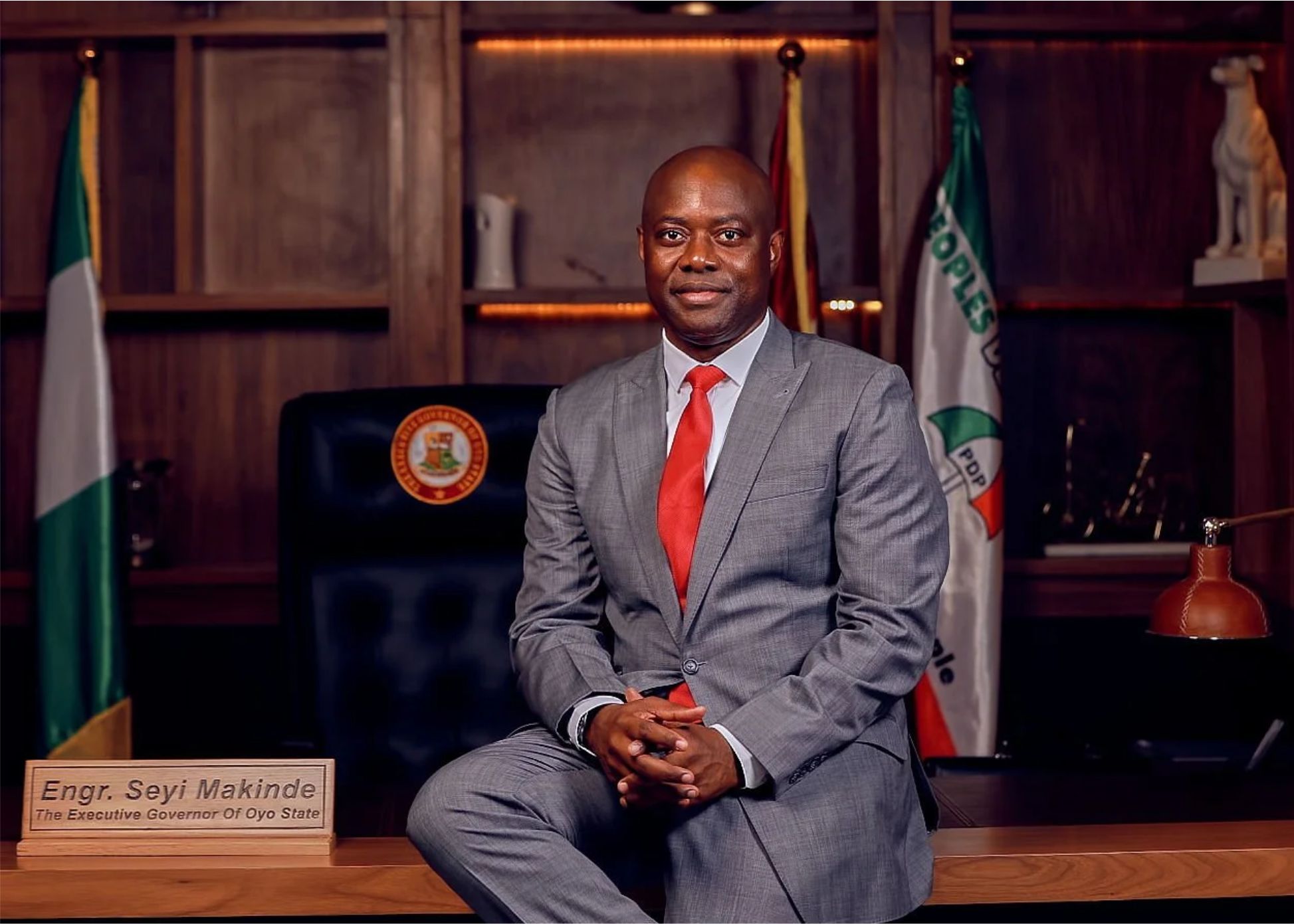
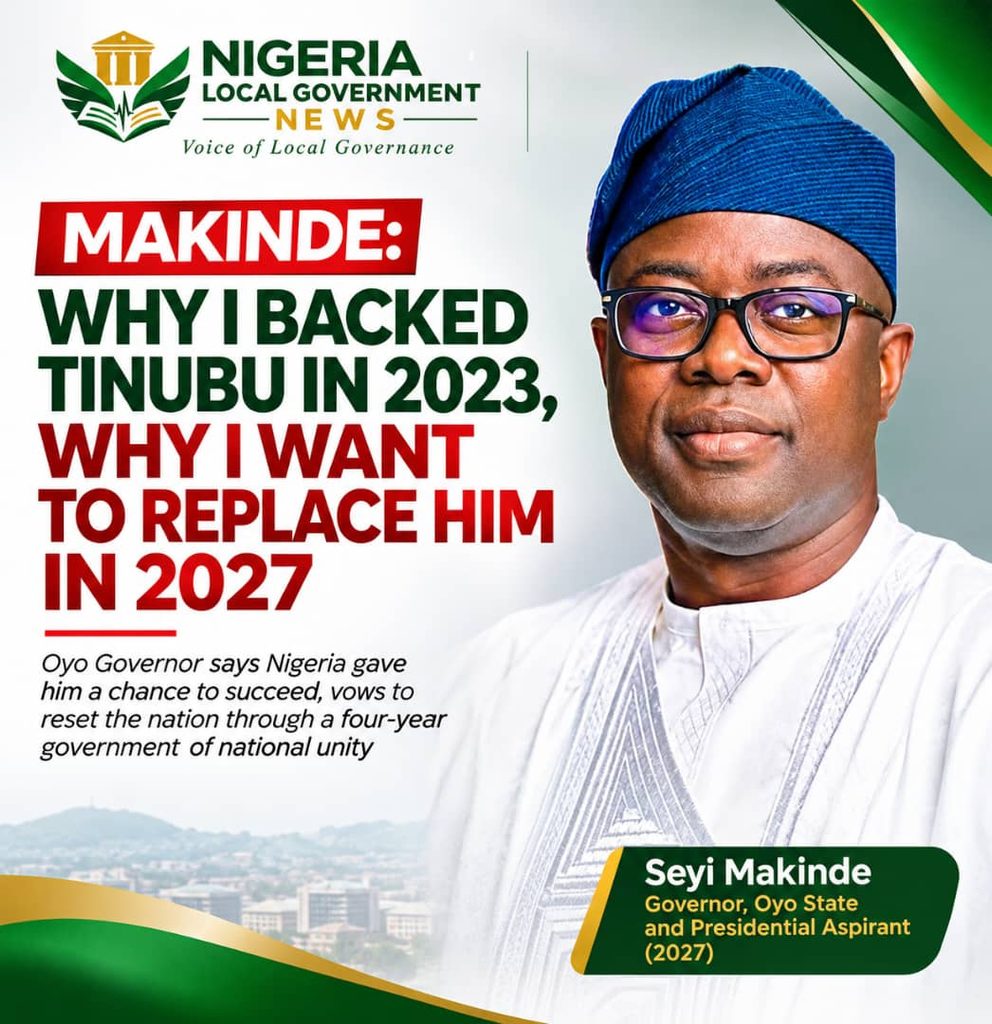
IBADAN — Oyo State Governor, Seyi Makinde, presidential candidate of the Allied Peoples Movement (APM), has explained why he is challenging President Bola Ahmed Tinubu in 2027, saying his decision is not driven by personal disagreement or ambition for power, but by concern over Nigeria’s economic direction and declining opportunities for young people.
He set out his position in a lengthy statement published on his campaign platform, Reset Nigeria, on Thursday, 12 November 2026.
“Nigeria gave me the opportunity to live my dreams,” Makinde said. “The Nigeria that gave me the opportunity to live my dreams should not become a country where our children can no longer dream.”
From Modest Beginnings
Makinde was raised in a lower-middle-class household in Ibadan. His father was a teacher who later became an accountant; his mother was a civil servant and telephone operator.
He attended Bishop Phillips Academy, Ibadan, studied Electrical Engineering at the University of Lagos, and at 29 founded Makon Engineering and Technical Services.
After failed bids for office between 2007 and 2015, he won the Oyo governorship in 2019 and was re-elected in 2023. He says he did so without a political godfather.
For Makinde, his story shows what Nigeria once made possible — opportunity through education, hard work and enterprise. He argues that opportunity is now increasingly out of reach for millions of young Nigerians.
Why He Supported Tinubu — And What Changed
Makinde said he backed Tinubu in 2023 because he believed Tinubu’s experience and political relationships could help bring Nigerians together to build a government of national unity and competence.
Three years on, he says that confidence has eroded.
He lists four reasons for withdrawing support:
- Economic stability without economic development — revenue and reserves improving, but living conditions not improving
- Governance by excuses — explanations rather than measurable results
- Political power over national unity — political consolidation at the expense of a healthy multiparty democracy and national unity
- Reforms without protection — economic reforms implemented without adequate protection for vulnerable Nigerians.
Subsidy Removal: What He Would Have Done Differently
Makinde supports subsidy and foreign-exchange reform in principle, but says the Federal Government should have prepared stronger protections before removing petrol subsidy.
He says he would have used the presidential transition period to convene the National Economic Council, agree interventions with state governors, establish funding arrangements and ensure transparent implementation.
As evidence of his approach, he points to Oyo State’s response:
- Within 11 days: deployed additional Omituntun buses, maintained existing fares, introduced half-price travel for students and senior citizens
- August 2023: launched SAfER — Sustainable Actions for Economic Recovery — providing food relief to 200,000 vulnerable households, subsidised transportation and support for small businesses and farmers.
His argument: reform and social protection must proceed together.
A Four-Year Presidency to Reset Nigeria
Makinde’s most distinctive pledge is to serve only one four-year term.
He said he intends to lead a transitional government of national unity focused on measurable progress. He first made the pledge at the APM North-East town hall in Yola, saying: “Our government will not last beyond four years. And it will be an all-inclusive government”.
His Reset Nigeria Agenda is built around four pillars:
- Security
- Economy
- Education
- Socio-political system
He argues candidates should answer: What will be done? How? When? And how will Nigerians know it succeeded?
The Grassroots Question
For Nigeria’s 774 LGAs, a key gap remains.
Makinde’s statement emphasises coordination among federal, state and local governments, but does not set out a detailed position on implementing financial autonomy for local councils following the Supreme Court judgment of July 2024.
As the campaign develops, voters will want to know whether his Reset Agenda would strengthen the financial independence, administrative capacity and development responsibilities of local governments — and how his record in Oyo on local council relations aligns with that promise.
A Message to Disillusioned Nigerians
Makinde acknowledges widespread disappointment with government and growing belief that elections no longer produce change. He urges Nigerians not to give up hope, and invites them to examine his record and interrogate his proposals.
The test is whether a compelling personal story and critique of the status quo can become a practical national programme that delivers measurable results — from the centre down to the grassroots.
NIGERIA LOCAL GOVERNMENT NEWS (NLGN)
Voice of Local Governance
http://www.nlgnews.ng